
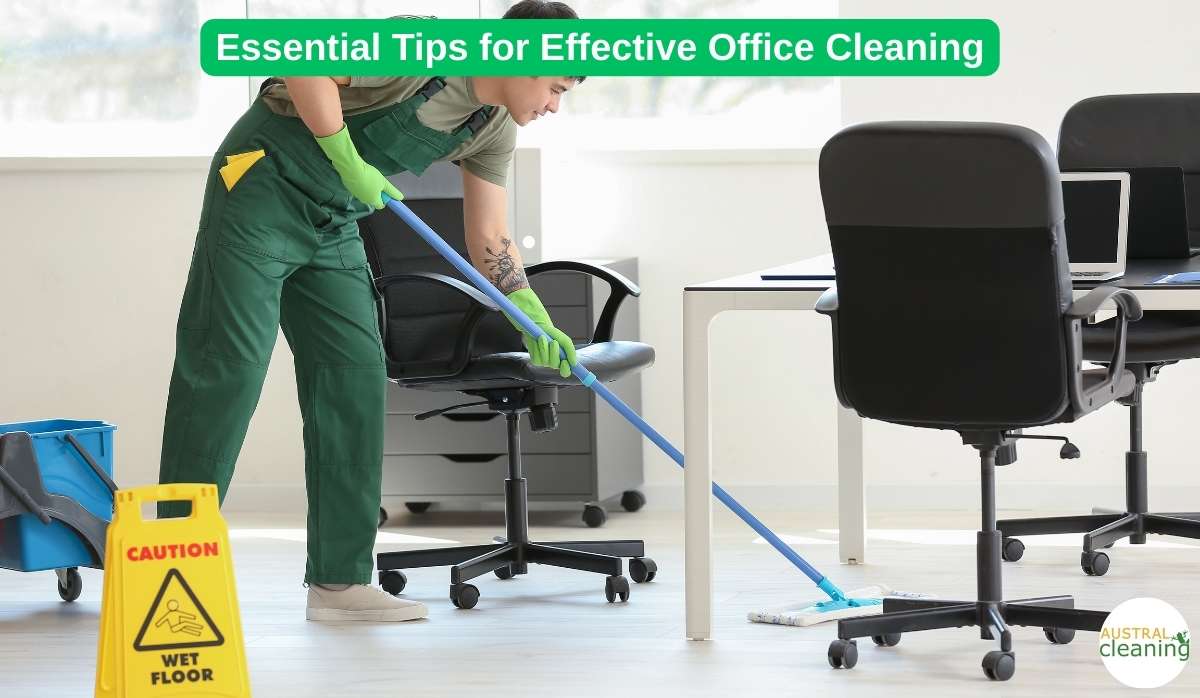
Office cleaning is more than just tidying up. It’s about creating a healthy and productive environment. A clean office reduces germs and boosts employee morale.
Regular cleaning is essential for any business. It ensures a safe and pleasant workspace. This guide will provide you with effective office cleaning tips.
Whether you manage a small office or a large facility, maintaining cleanliness is crucial. It impacts both employee health and company image.
From high-touch areas to eco-friendly products, every detail matters. Implementing a structured cleaning schedule can make a significant difference.
Explore these essential tips to enhance your office cleaning practices. Discover how to create a cleaner, more efficient workplace.
Summary
This guide explains how a clean office supports health, morale, and a professional image, and provides practical strategies to sustain it. It highlights priority areas (high-touch surfaces, restrooms, kitchens), outlines daily/weekly/monthly scheduling, and compares in-house versus professional services. Eco-friendly practices and employee habits between cleanings are emphasized, along with common mistakes to avoid to maintain consistent hygiene and productivity.
Why Office Cleaning Matters
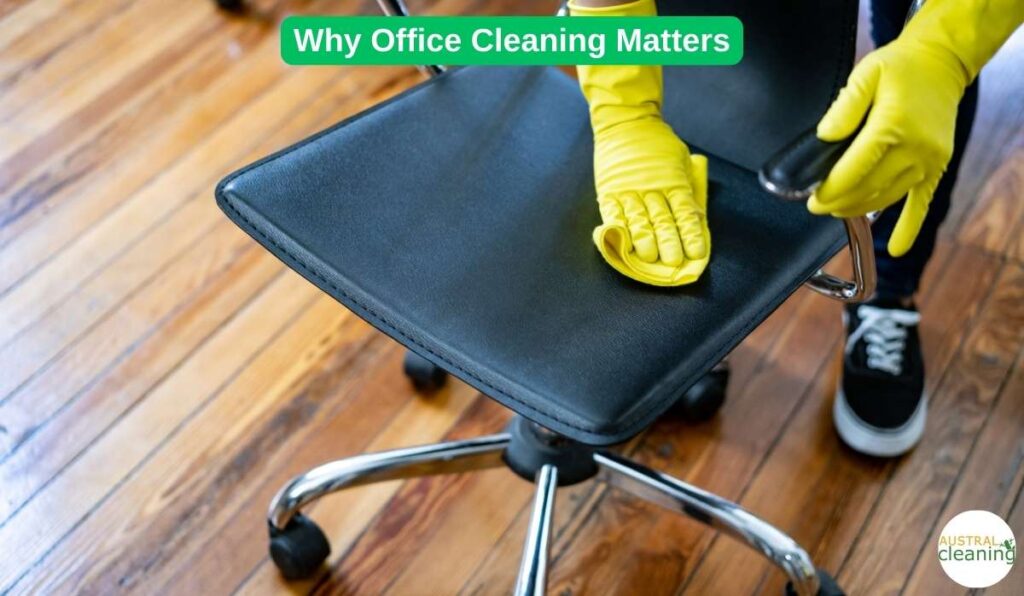
A clean office is vital for employee health and productivity. It helps prevent the spread of germs, reducing sick days. A tidy workspace reflects professionalism and boosts company reputation.
Office cleanliness also improves employee morale. Workers feel more valued in a pleasant environment. They tend to be more productive and satisfied with their jobs.
Key reasons why office cleaning matters:
- Reduces the spread of illnesses
- Enhances company image
- Boosts employee morale and productivity
Regular cleaning is not just about aesthetics. It ensures a healthy work environment that benefits everyone. By maintaining cleanliness, businesses can also show their commitment to employee wellbeing and workplace safety.
Key Areas to Focus On During Office Cleaning
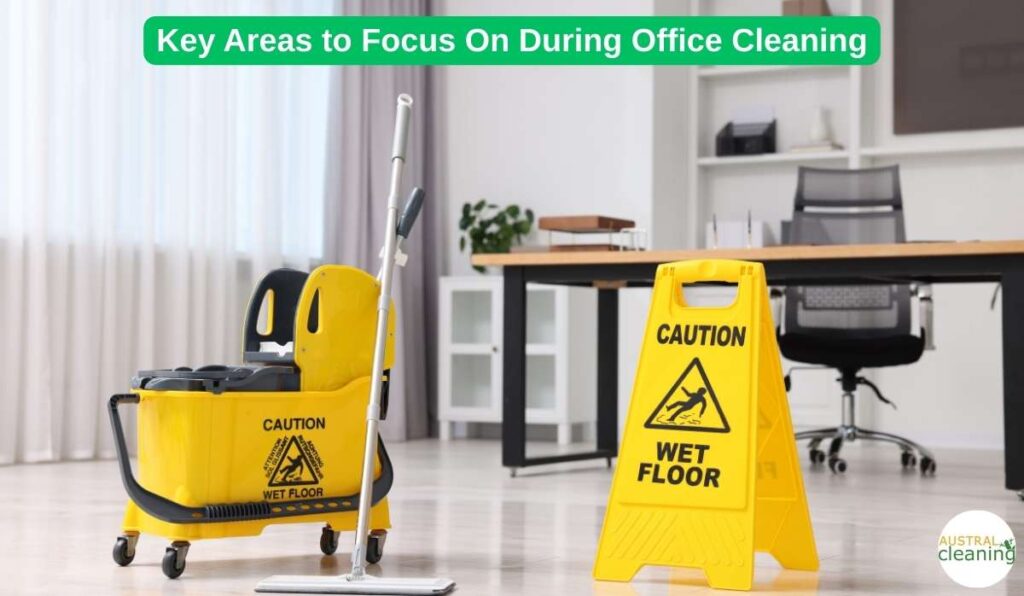
Focusing on the right areas during office cleaning enhances effectiveness. Begin with high-touch surfaces, which harbor the most germs. These include doorknobs, keyboards, and phones. They should receive daily attention to prevent illness spread.
Another critical area is the restroom. Clean restrooms daily and ensure all supplies are restocked. This practice maintains hygiene and keeps unpleasant odors at bay. A dirty restroom can quickly tarnish your workplace’s reputation.
The kitchen and break room deserve special attention as well. These spaces can attract pests if not cleaned regularly. Ensure counters, sinks, and appliances are wiped down and cleaned frequently.
Key office cleaning focus areas:
- High-touch surfaces (doorknobs, keyboards)
- Restrooms with daily cleaning and restocking
- Kitchens and break rooms to prevent pests
Regular maintenance of carpets and upholstery is essential too. Dust and allergens can accumulate, affecting air quality. Thus, vacuum often to keep allergens under control and ensure a healthier workplace. Implementing these practices promotes a clean, welcoming office environment for all.
Creating an Efficient Office Cleaning Schedule
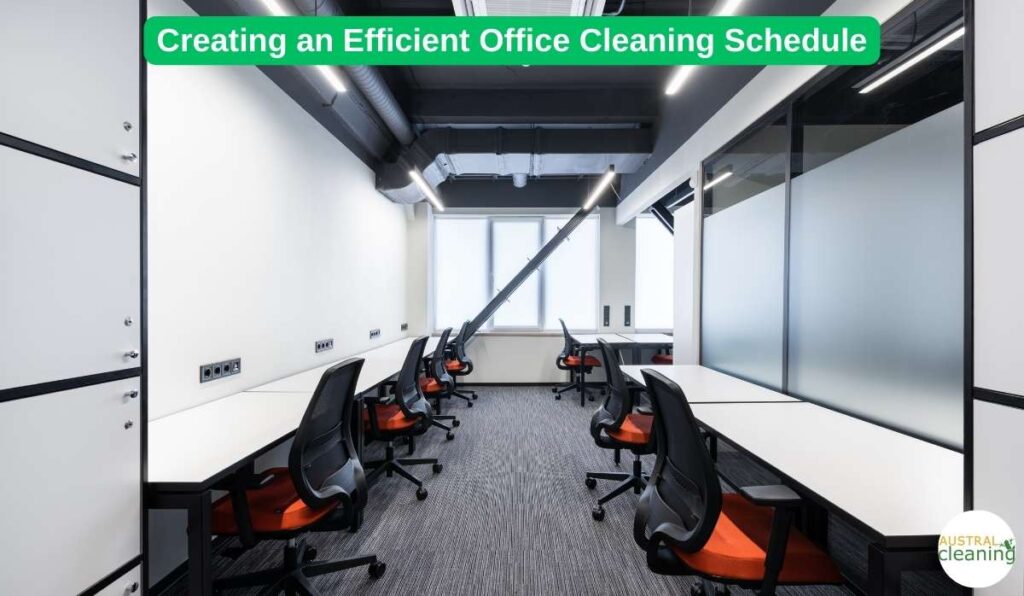
An efficient office cleaning schedule ensures all areas receive attention. Regular cleaning keeps your office organized and presentable. Establishing a routine helps identify specific needs based on office size and usage patterns.
First, assess which tasks require daily, weekly, or monthly attention. Daily tasks often include cleaning high-touch surfaces and restocking restrooms. Weekly duties might involve vacuuming carpets and dusting surfaces. Monthly efforts could focus on deep cleaning tasks like washing windows.
Communicate with your cleaning team to align on the schedule. Ensure everyone understands their responsibilities. This coordination prevents oversight and maximizes efficiency.
Checklist for an office cleaning schedule:
- Daily: High-touch surfaces, restrooms
- Weekly: Carpet vacuuming, dusting
- Monthly: Window cleaning, deep cleaning tasks
By following a structured schedule, office cleaning becomes manageable and effective. Regular evaluations help adjust the plan, addressing any emerging needs.
Choosing Between In-House and Professional Cleaning Services

When deciding on cleaning services, consider your office needs and budget. In-house cleaning offers direct control and flexibility. However, it requires resources for training and equipment.
Professional cleaning services provide expertise and convenience. These teams come equipped with tools and eco-friendly supplies. They handle specialized tasks efficiently, often outside of regular work hours to avoid disruption.
Evaluate the pros and cons of each option based on your office size and specific demands. Here are some factors to consider:
- Cost: Compare in-house versus professional service expenses.
- Expertise: Assess if your staff can meet cleaning standards.
- Flexibility: Determine if your schedule allows for outsourced services.
Ultimately, your choice should align with your company’s priorities and operational needs. Balancing quality and cost can lead to optimal office maintenance.
Eco-Friendly and Safe Cleaning Practices
Embracing eco-friendly cleaning is smart for offices. This approach benefits both employees and the environment. Choose biodegradable cleaning products free from harsh chemicals. They reduce toxic fumes and are safer for daily use.
Eco-friendly practices extend beyond supplies. Implementing energy-efficient tools like vacuum cleaners can lessen your environmental impact. These tools often clean better while conserving energy. Additionally, green certification or labels on products can guide your choices.
Consider these eco-friendly tips for a safer office:
- Use microfiber cloths to reduce waste from paper towels.
- Opt for non-toxic, plant-based cleaning agents.
- Ensure proper ventilation during and after cleaning tasks.
Adopting these practices supports sustainability and promotes a healthier workspace. Eco-friendly cleaning can improve indoor air quality and worker wellbeing, contributing to long-term office success.
Tips for Maintaining Cleanliness Between Professional Cleanings

Keeping your office tidy between scheduled cleanings helps maintain a healthy environment. Encourage employees to contribute to maintaining cleanliness. A few simple practices can make a significant difference.
Firstly, establish a clean desk policy. This encourages staff to keep their workspaces neat and orderly. A clutter-free desk improves focus and reduces stress. In addition, it makes periodic cleaning more efficient.
Other key tips include:
- Encourage regular wiping of keyboards and phones.
- Position waste bins in accessible locations.
- Promote the use of available sanitizing stations.
By integrating these habits into daily routines, the office remains clean, reducing the need for frequent deep cleans. This proactive approach supports overall workplace hygiene and boosts employee morale.
Common Office Cleaning Mistakes to Avoid
Office cleaning can be challenging if common pitfalls are not avoided. Inefficiencies and overlooked details can undermine hygiene standards. Awareness of these missteps ensures effective cleanliness and safety.
Here are some mistakes to watch out for:
- Neglecting high-touch surfaces like doorknobs.
- Using the same cloth for multiple areas.
- Failing to update cleaning schedules.
Each of these errors can lead to ineffective cleaning and potential cross-contamination. Overlooking them means risking employee health and reducing productivity. By identifying and avoiding these mistakes, businesses can maintain higher cleaning standards and provide a healthier workplace for everyone.
Conclusion: Building a Healthier, More Productive Workplace

A clean office fosters a productive and healthy work environment. Prioritizing regular office cleaning reduces germs, boosts employee morale, and maintains a professional image.
Implementing consistent cleaning schedules tailored to office needs ensures all areas remain spotless. Investing in effective cleaning services or well-trained in-house staff can further enhance outcomes. An emphasis on eco-friendly practices and regular evaluations will create a sustainable cleaning routine.
By focusing on these aspects, businesses can create a welcoming and efficient workspace, ultimately contributing to improved employee satisfaction and productivity. Cleaning is not just about appearance; it’s about cultivating a healthier future for everyone in the office.
Leave A Comment